Server-Side vs Client-Side Tracking: What's the Difference?
A detailed comparison of server-side and client-side affiliate tracking — how each works, their limitations, and which approach delivers better accuracy in a privacy-first world.
Understanding the Tracking Landscape
Affiliate tracking technology sits at the intersection of two competing forces: the need for accurate attribution and the growing demand for user privacy. How you track affiliate referrals — on the client side or the server side — determines how well your program navigates this tension.
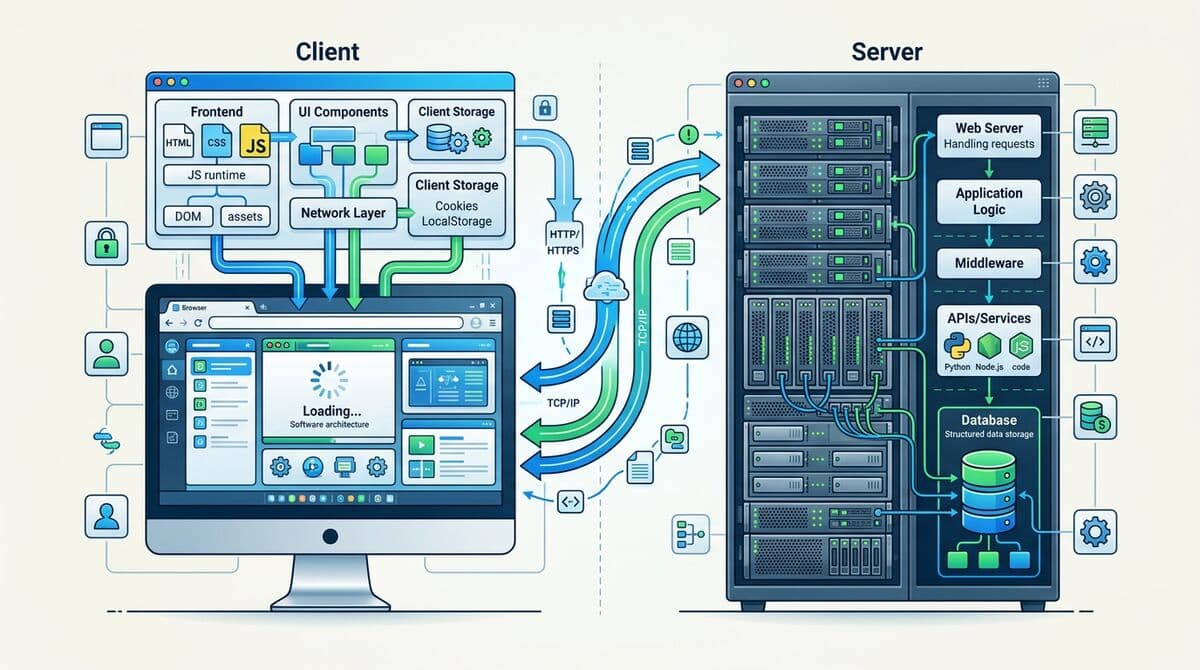
Client-side tracking runs in the user's browser. It uses JavaScript, cookies, and tracking pixels to identify visitors and record conversions. Server-side tracking runs on your backend infrastructure, using webhooks and API calls to attribute conversions without depending on the browser. Each approach has fundamentally different strengths and vulnerabilities.
Understanding these differences is not an academic exercise. The tracking method you choose directly impacts your attribution accuracy, which in turn affects affiliate satisfaction, recruitment, and program growth. An affiliate who sees 30% of their referrals go untracked will either demand higher commission rates to compensate or stop promoting your product entirely.
How Client-Side Tracking Works
Client-side tracking relies on code that executes in the visitor's web browser. The two primary mechanisms are cookies and tracking pixels.
Cookie-Based Tracking: When a visitor clicks an affiliate link, a JavaScript snippet on your website creates a cookie in the visitor's browser. This cookie stores the affiliate's identifier and typically has an expiration date of 30 to 90 days. When the visitor later makes a purchase, the JavaScript on your checkout page reads the cookie and reports the conversion to the affiliate platform, which then credits the affiliate.
Tracking Pixels: A tracking pixel is a tiny, invisible image or JavaScript snippet embedded on your conversion confirmation page. When the page loads, the pixel fires an HTTP request to the affiliate platform, reporting the conversion along with any identifying information like the order value and transaction ID. The pixel approach is simpler to implement than cookie tracking but depends on the confirmation page loading completely.
Client-side tracking was the industry standard for nearly two decades because it was easy to implement — just paste a snippet of JavaScript into your website — and worked reliably when browsers treated cookies as a fundamental, trusted part of web infrastructure. But the browser landscape has changed dramatically.
The Problems with Client-Side Tracking
Cookie-Based Tracking
Traditional approach
Blocked by ad blockers (30%+ users)
Expires after 7 days (Safari ITP)
Killed by privacy browsers
~70% attribution accuracy
Server-Side Tracking
Icodrip approach
Immune to ad blockers
No cookie expiration
Works on all browsers
~100% attribution accuracy
Client-side tracking faces a growing list of challenges that are steadily eroding its reliability. These are not temporary issues — they reflect a permanent structural shift toward privacy-first browsing.
Ad Blockers: Over 40% of internet users now use ad-blocking browser extensions. Many of these tools block not just ads but all third-party tracking scripts and cookies. When an ad blocker prevents your affiliate tracking JavaScript from executing, the click is never recorded and the conversion is never attributed. The affiliate gets no credit, and you have no data on which partners are driving value.
Safari Intelligent Tracking Prevention (ITP): Apple's Safari browser implements ITP, which limits first-party cookies set via JavaScript to a 7-day lifespan and blocks all third-party cookies. Since Safari accounts for approximately 20% of global browser traffic and over 30% on mobile, this restriction alone can cause you to lose attribution on a significant portion of your affiliate referrals.
Firefox Enhanced Tracking Protection (ETP): Mozilla's Firefox browser blocks third-party tracking cookies by default and restricts first-party cookie access for known tracking domains. While Firefox has a smaller market share than Safari, its privacy stance compounds the attribution gap.
Chrome Privacy Sandbox: Google Chrome, which holds roughly 65% of global browser market share, has been implementing the Privacy Sandbox initiative. This fundamentally changes how tracking works in Chrome, replacing traditional cookies with privacy-preserving APIs that provide far less granular attribution data for affiliate marketers.
GDPR Cookie Consent: Under GDPR and similar regulations, websites must obtain explicit consent before placing tracking cookies. Research consistently shows that 30-50% of users decline cookie consent banners, immediately eliminating tracking capability for those visitors. This is not an opt-out edge case — it is a substantial portion of your traffic.
Cross-Device Attribution Failure: Cookies are stored per-browser on a specific device. When a user clicks an affiliate link on their phone but completes the purchase later on their laptop, the cookie is not present and the conversion goes untracked. Cross-device journeys are now the norm, not the exception.
How Server-Side Tracking Works
How Server-Side Tracking Works
User clicks referral link
Icodrip logs click + ref code
User makes purchase
Payment webhook sent to Icodrip
Commission calculated
Server-side tracking removes the browser from the attribution chain entirely. Instead of relying on cookies and JavaScript, it uses backend systems — webhooks, APIs, and database records — to track the full journey from click to conversion.
The process starts when a visitor clicks an affiliate link. The tracking platform records the click server-side and extracts the referral identifier. Your application receives this identifier as a URL parameter and stores it in your database alongside the user record when they sign up. This creates a permanent, server-side link between the customer and the referring affiliate.
When a conversion occurs — a purchase, subscription, or other qualifying event — your payment processor sends a webhook notification to the tracking platform. The webhook contains the customer identifier, transaction amount, and other relevant data. The tracking platform matches this information against its stored referral data and attributes the conversion to the correct affiliate.
Because this entire process happens on the server, it is completely invisible to the browser and unaffected by ad blockers, privacy settings, cookie restrictions, or device changes. The attribution data is stored in your infrastructure, not in the visitor's browser, making it fundamentally more durable and reliable.
For SaaS businesses using Stripe, the integration is particularly elegant. Stripe webhooks provide real-time notifications for every payment event — subscription creation, renewal, upgrade, downgrade, cancellation, and refund. The tracking platform processes each event automatically, calculating commissions and updating affiliate dashboards in real time.
How Webhooks Power Server-Side Attribution
Webhooks are the backbone of server-side affiliate tracking. Understanding how they work helps you appreciate why server-side tracking is so much more reliable than client-side alternatives.
A webhook is an HTTP callback — an automated message sent from one system to another when a specific event occurs. In the affiliate tracking context, your payment processor sends webhooks to your tracking platform whenever a payment-related event happens.
The webhook flow works as follows:
- Event Trigger: A customer makes a payment through your payment processor (Stripe, Paddle, LemonSqueezy). The processor generates an event with all the transaction details.
- Webhook Delivery: The payment processor sends an HTTP POST request to the webhook endpoint configured in your tracking platform. This request contains a JSON payload with the event type, customer information, payment amount, and subscription details.
- Signature Verification: The tracking platform verifies the webhook signature to confirm it was genuinely sent by the payment processor and was not tampered with in transit. This prevents fraudulent conversion reporting.
- Attribution Matching: The platform extracts the customer identifier from the webhook payload and matches it against its database of referral records. If a match is found, the conversion is attributed to the referring affiliate.
- Commission Processing: The platform calculates the commission based on your program rules and records it in the affiliate's account. The affiliate sees the conversion and commission in real time on their dashboard.
Webhooks are reliable because they are server-to-server communications that operate independently of what happens in the browser. Payment processors implement retry logic for failed webhook deliveries, ensuring that no conversion is lost due to temporary network issues.
Server-Side vs Client-Side: Direct Comparison
Tracking Accuracy: Cookie vs Server-Side
No ad blockers (cookie)
With ad blockers (cookie)
Server-side (any scenario)
40%+ of internet users use ad blockers — server-side tracking is unaffected
Here is a side-by-side comparison of the two approaches across the dimensions that matter most for affiliate program operators:
- Attribution Accuracy: Client-side achieves 60-80% accuracy in 2026 due to browser restrictions. Server-side achieves 99-100% accuracy because it operates independently of the browser.
- Ad Blocker Impact: Client-side tracking is completely blocked by most ad blockers. Server-side tracking is unaffected — no client-side scripts are required for attribution.
- Cross-Device Support: Client-side fails across devices because cookies are browser-specific. Server-side tracks by user account, working correctly across any device.
- Privacy Compliance: Client-side requires cookie consent banners under GDPR, losing 30-50% of trackable users. Server-side processes data server-to-server and can be configured without tracking cookies.
- Recurring Revenue: Client-side loses attribution when cookies expire (typically 30-90 days). Server-side tracks every recurring payment indefinitely through payment processor webhooks.
- Fraud Resistance: Client-side is vulnerable to cookie stuffing and click fraud. Server-side validates conversions through payment processor data, making fraud much harder.
- Implementation: Client-side is simpler (paste a JS snippet). Server-side requires payment processor integration, though modern platforms like Icodrip make this a matter of minutes.
- Data Reliability: Client-side data can be manipulated by browser extensions, JavaScript errors, or network issues. Server-side data comes directly from your payment processor, the authoritative source of truth.
Which Approach Should You Choose?
The answer depends on your business model, but for the vast majority of modern businesses — and especially SaaS companies — server-side tracking is the clear winner.
Choose server-side tracking if: you run a subscription-based business, accuracy is important to your program's credibility, you need to track conversions across devices, you want to comply with GDPR without losing attribution data, you need to process recurring commissions automatically, or you want to build long-term relationships with high-value affiliate partners who demand transparent reporting.
Client-side tracking may still work if: you run a simple content site with low-value one-time transactions, absolute tracking accuracy is not critical to your business, you do not have the ability to integrate with a payment processor, or you are using a legacy affiliate network with no server-side option.
The industry trajectory is unmistakable. Browser privacy restrictions will only tighten, ad blocker adoption will only grow, and cross-device journeys will only become more common. Investing in server-side tracking today is investing in the future reliability of your affiliate program.
If you are currently using client-side tracking and experiencing attribution gaps, migrating to server-side is straightforward with modern platforms. Read our detailed migration guide for step-by-step instructions on making the switch.
Frequently Asked Questions
Related Topics
What Is Affiliate Tracking? The Complete Guide
Learn how affiliate tracking works, the different tracking methods available, key metrics to monitor, and how to choose the right tracking platform for your business.
cookieless affiliate trackingCookieless Affiliate Tracking: The Future of Attribution
Understand why third-party cookies are disappearing, how browser privacy changes impact affiliate tracking, and what cookieless alternatives ensure accurate attribution going forward.
affiliate fraud preventionAffiliate Fraud Prevention: Types, Detection & Protection
Learn about the most common types of affiliate fraud, how to detect suspicious activity, and the tools and strategies to protect your affiliate program from abuse.
Further Reading
Ready to launch your affiliate program?
Start tracking referrals in 2 minutes. Free plan available.
Start Free